
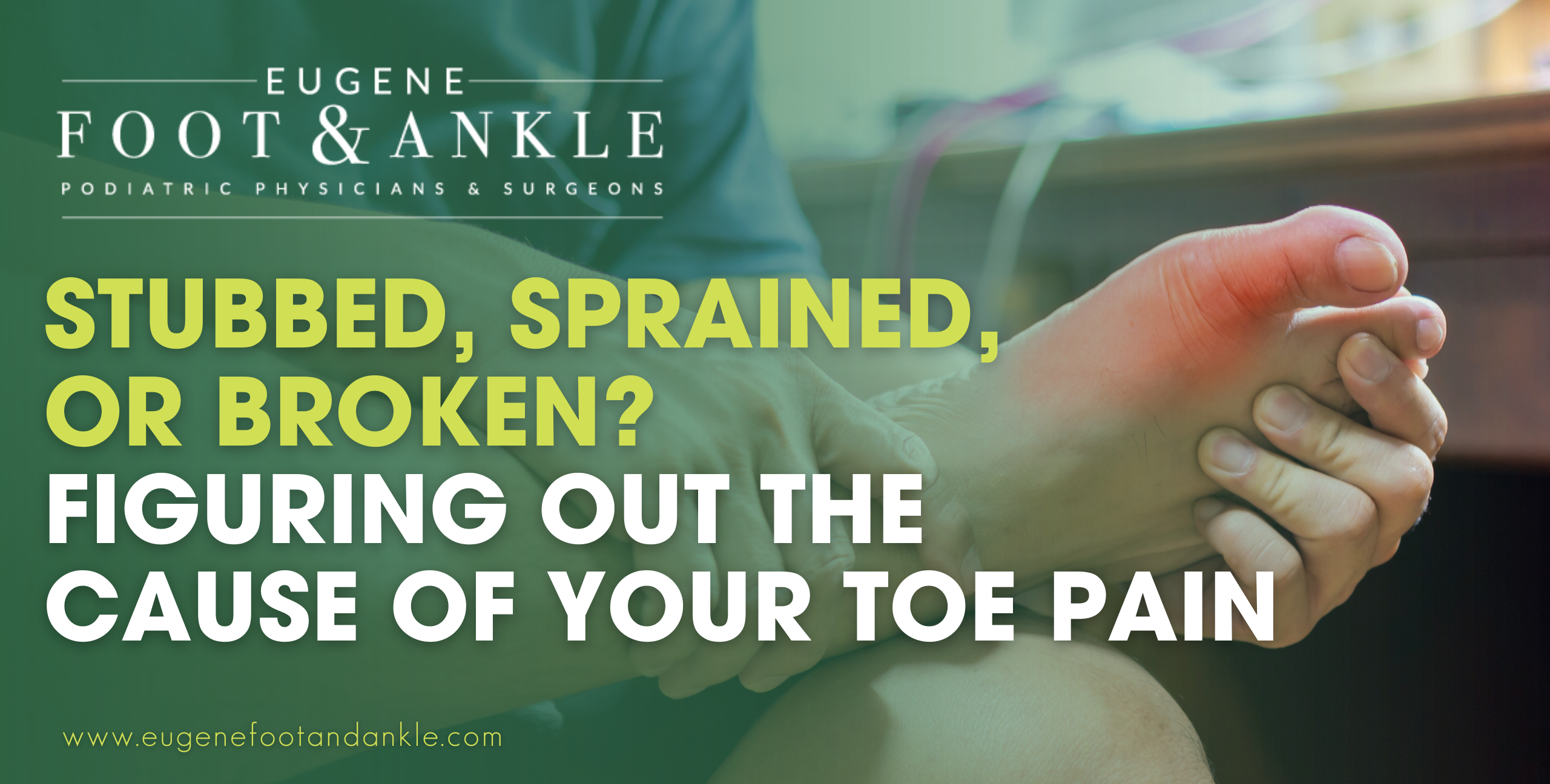
Stubbed, Sprained, or Broken? Figuring out the Cause of Your Toe Pain
Toe pain may not seem like a big deal, but it can be surprisingly disruptive when it keeps you from walking comfortably, wearing your favorite shoes, or sleeping through the night.
There could be several reasons for your toe pain, ranging from simple injuries to more serious conditions. Figuring out what’s causing the pain is the first step to fixing the discomfort, and in some cases, preventing further damage.
Stubbed Toe Injuries
We’ve all been there: you’re walking around the house barefoot, when you suddenly slam your toe into a piece of furniture. Ouch.
A stubbed toe is one of the most common causes of toe pain, and one of the most easily identifiable causes of pain in your toe; it usually results in immediate pain, swelling, and bruising.
In most cases of a stubbed toe, the pain goes away with rest, ice, and elevation. However, if your pain gets worse, or if you notice significant swelling or bruising after a few days, you might be dealing with a sprain or fracture instead.
Sprained Toe
A sprain happens when the ligaments around the joint are stretched or torn. Toe sprains often happen from jamming, twisting, or overextending the toe. Symptoms of a sprained toe can mimic a fracture, including swelling, bruising, and pain when moving the toe.
You can usually treat a minor sprain at home with the RICE Method:
R - Rest
I - Ice
C - Compression
E - Elevation
However, moderate to severe sprains will need medical attention, especially if you’re unable to bear weight on your foot or the pain interferes with daily activities.
Broken (Fractured) Toe
A fractured toe occurs when one of the toe bones breaks or cracks. It could happen from a traumatic injury, like dropping something heavy on your foot, or from repetitive stress, like stress fractures from running or high-impact sports.
Symptoms of a broken toe may include:
- Sharp or throbbing toe pain
- Immediate swelling or bruising
- A visible deformity or misalignment
- Difficult walking or putting weight on the foot
If you suspect your toe pain might be stemming from a fracture, it’s important to get an X-ray and evaluation from medical professionals. Even small toe fractures can lead to long-term discomfort or stiffness without proper care.
Ingrown Toenail
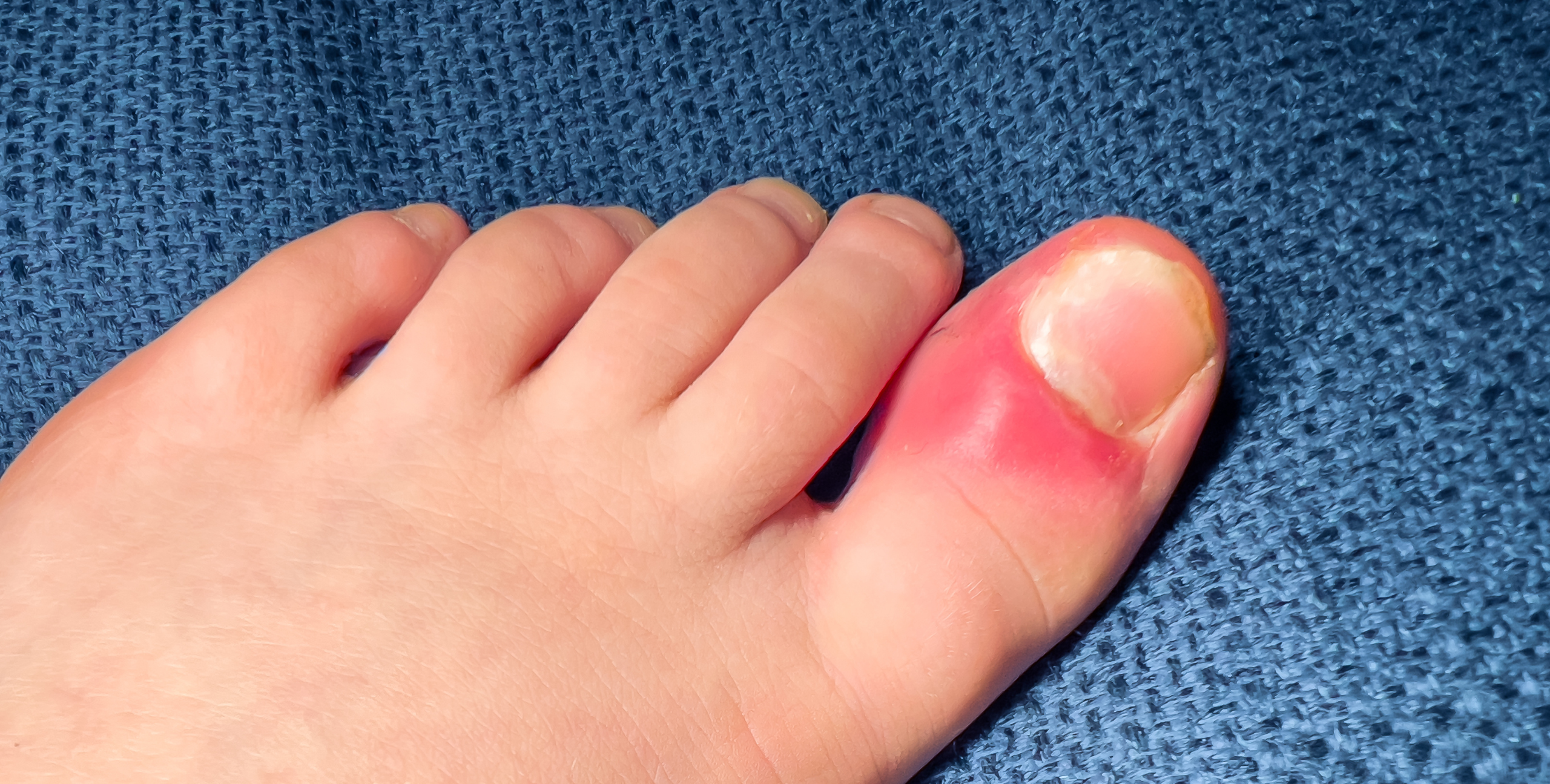
An ingrown toenail happens when the edge of the nail grows into the surrounding skin, causing redness, swelling, and toe pain, usually in the big toe. Tight shoes, improper nail trimming, or injury can lead to your toenails becoming ingrown.
Soaking the foot and wearing open-toed shoes might help in its early stages. If the pain worsens or becomes infected, as seen in the picture below (think pus, redness, or throbbing), it’s best to have it treated by a podiatrist. In-office treatments are quick and can prevent recurring issues.
Bunions and Tailor’s Bunions
A bunion is a bony bump that forms at the base of the big toe when the joint becomes misaligned. A tailor’s bunion, also referred to as a bunionette, appears on the outside of the foot near the little toe. Both can cause consistent toe pain, especially when wearing tight or narrow shoes.
Bunions are progressive, so they tend to get worse over time if there isn’t treatment. Changing your shoes or getting orthotics can help reduce discomfort. In more severe cases, surgery may be required.
Gout
Gout is a variety of inflammatory arthritis that often shows up suddenly, frequently affecting the joint at the base of the big toe. When uric acid builds up in the joint, it causes intense toe pain, redness, swelling, and warmth.
Gout attacks can come on overnight and feel so painful that even the weight of a bedsheet is too much. If you experience these symptoms, you’ll need to visit a podiatrist. Gout can be managed with medication and changes to your diet once diagnosed.
Arthritis
Osteoarthritis and rheumatoid arthritis can affect your toes and lead to chronic toe pain, swelling, stiffness, especially in the morning or after long periods of rest. Arthritis can cause changes in the structure of the foot and reduce mobility over time.
Management might include anti-inflammatory medications, joint-friendly footwear, and physical therapy. In advanced cases, your podiatrist may suggest surgical options to relieve pain and restore function.
Neuroma or Nerve Pain
A neuroma is a thickening of nerve tissue that can cause sharp, burning pain or a tingling sensation between the toes, most often between the third and fourth toes. While not technically a cause of toe pain in the bone or joint, nerve-related pain can be just as disruptive.
Neuromas are often aggravated by tight shoes or high-impact activities. Custom orthotics, shoe modifications, or in-office procedures can help relieve the nerve pressure.
Toenail Fungus
Fungal infections in the toenail can cause thickening, discoloration, crumbling, and sometimes toe pain, especially when the nail becomes deformed or presses into the surrounding skin. These infections are common but stubborn and require consistent treatment with antifungal creams or prescription medications.
Poor Circulation or Diabetes-Related Nerve Pain
If you have diabetes or circulation problems, you may experience toe pain that feels more than a tingling, burning, or numbing sensation rather than sharp or localized discomfort. This can be a sign of neuropathy, and it’s important to watch your symptoms closely to avoid complications like foot ulcers or infections.
When to See a Podiatrist for Your Toe Pain
Mild toe pain that resolves in a day or two isn’t usually something to stress over. Persistent, worsening, or unexplained pain, however, deserves professional attention. You should visit the podiatrist if:
- The pain lasts more than a few days without improvement
- You have swelling, bruising, or trouble walking
- There’s a visible deformity in the toe
- You notice changes in your feet and have diabetes or circulation issues
Final Thoughts
Toe pain isn’t something you have to live with. Injuries, sprains, bunions, arthritis- there are many reasons why your toes might be hurting, and just as many ways to help treat the root cause. Paying attention to your symptoms and seeking care when needed can make all the difference in keeping your feet healthy and pain-free.
If you’re experiencing persistent toe pain, Dr. McCourt and Dr. Green at Eugene Foot and Ankle are here to help. Even if it’s just a simple issue, we’ll work with you to find the cause and get you back on your feet pain-free.
Contact Us
Eugene
Hours:
Monday............ 8:00am - 5:00pm
Tuesday............ 8:00am - 5:00pm
Wednesday............ 8:00am - 5:00pm
Thursday............ 8:00am - 5:00pm
Friday............ 8:00am - 4:00pm (Only available on phones)
Closed for lunch from 12pm - 1pm and closed until 1:30pm on Tuesdays
© Copyright 2026 Eugene Foot and Ankle. All Rights Reserved. | Privacy Policy.